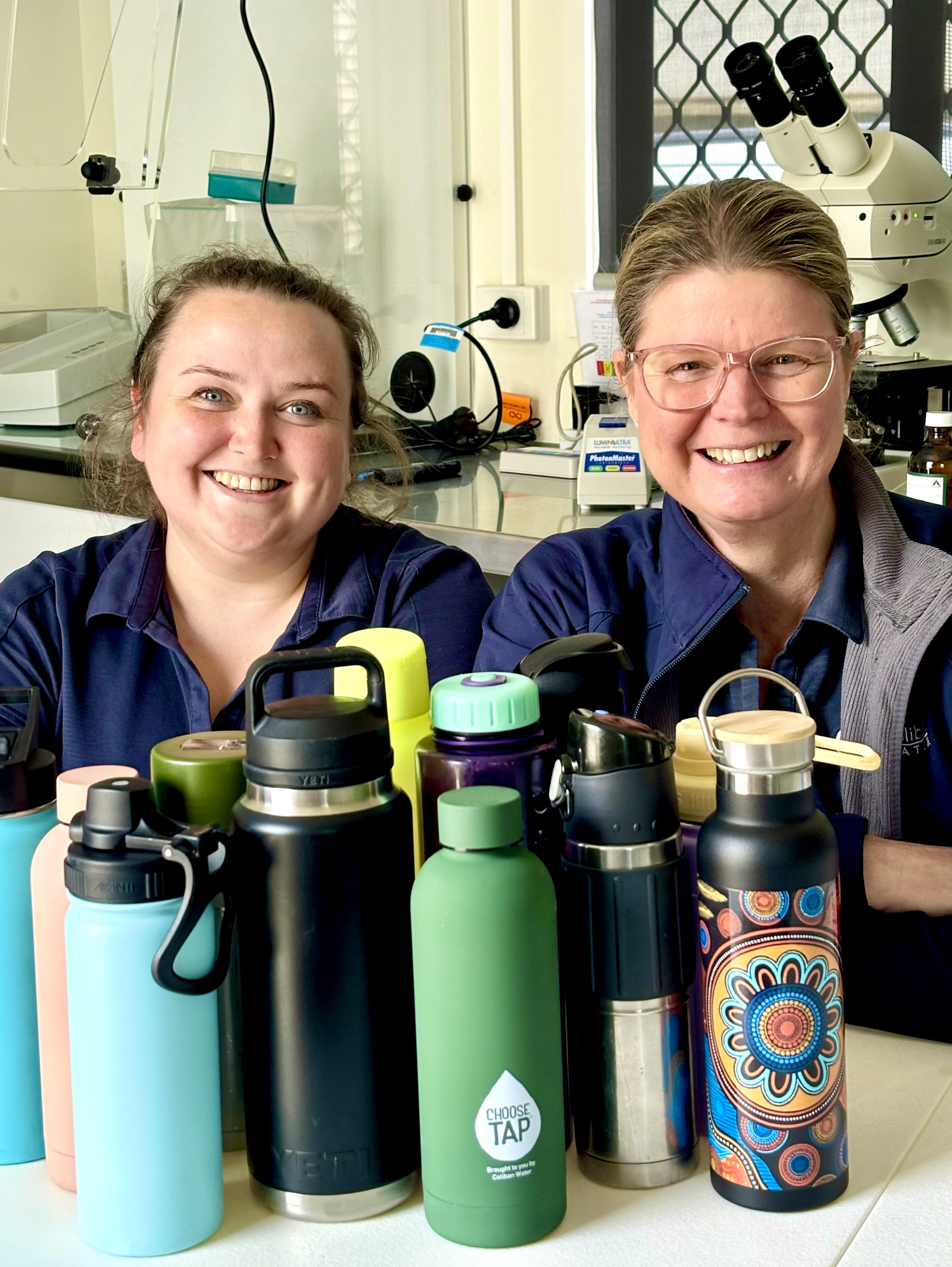
Surely a quick rinse is enough! How clean is your favourite water bottle?
Like your keys and phone, is your water bottle a ‘must-have’ accessory when leaving home for the day?
According to Coliban Water’s General Manager Asset Lifecycle, Marsha McMonigle, keeping a water bottle handy is a great habit for health and hydration, but care should be taken if you’re sipping from the same bottle day in and day out.
“When you fill your drink bottle with drinking water from taps across the Coliban Water region, you can feel confident the water is clean, fresh, and meets Australia’s strict safe drinking water guidelines.
“The water produced at our 19 Water Treatment Plants is some of the best drinking water in the world. Our team of water quality experts test multiple samples to make sure your tap water is safe and tastes great,” she said.
“Unfortunately, it’s what happens next that we can’t control.”
In a recent experiment, Coliban Water’s water quality scientists used their own colleagues as guinea pigs, testing the cleanliness and hygiene of their favourite reusable water bottles.
“With our staff representing a broad cross-section of the community, we used our new state-of-the-art laboratory to measure the concentration of adenosine triphosphate (ATP) in their drink bottle samples. ATP is the molecule found in all living cells, human, plant, and microbial.
“While the presence of ATP won’t typically make you ill in small amounts, extended periods of sipping and refilling between washes means your water bottle may be overdue preventative or even corrective action to limit unwanted microorganisms that could make you ill,” Ms McMonigle explained.
So, how often should you clean your water bottle?
Senior Water Quality Specialist, Sallyanne Bartlett, said every time you take a sip from your water bottle you are depositing bacteria inside. So, water bottles should be washed daily to prevent excessive bacterial build-up.
“When we tested our team’s water bottles, the results ranged from very low ATP indicating a very clean drink bottle with almost zero microorganisms, to very high ATP levels indicating the presence of microorganisms that could cause illness.
“Regular washing with warm water and dishwashing detergent, or a quick trip through the dishwasher if your bottle is dishwasher-safe, reduces the number of microorganisms inside and outside your water bottle. If your bottle has a straw, crevices, or dents, it may need extra attention during cleaning,” she said.
“For best results, make sure your bottle is thoroughly rinsed before refilling.”
Why your water bottle should be a ‘must-have’ accessory
Every year Australians spend more than $736 million on bottled water and almost 375 million plastic bottles end up in landfill and our waterways. These bottles take up to 450 years each to break down and generate more than 60,000 tonnes of greenhouse gas emissions.
“Bottled water makes no sense in a dry climate, as it takes more than three litres of tap water to produce one litre of bottled water wasting this precious resource,” Ms McMonigle said.
“At 2,000 times the cost of tap water, plastic bottled water is an expensive convenience, so we love seeing our customers making a conscious, healthy, and environmentally sustainable choice and filling up with fresh tap water,” Ms McMonigle said.
The moral of the story? Keep refilling and drinking from your favourite water bottle, but give it a regular wash, too.
Image: Coliban Water's water quality specialists, Steffani Winchcomb and Sallyanne Bartlett