
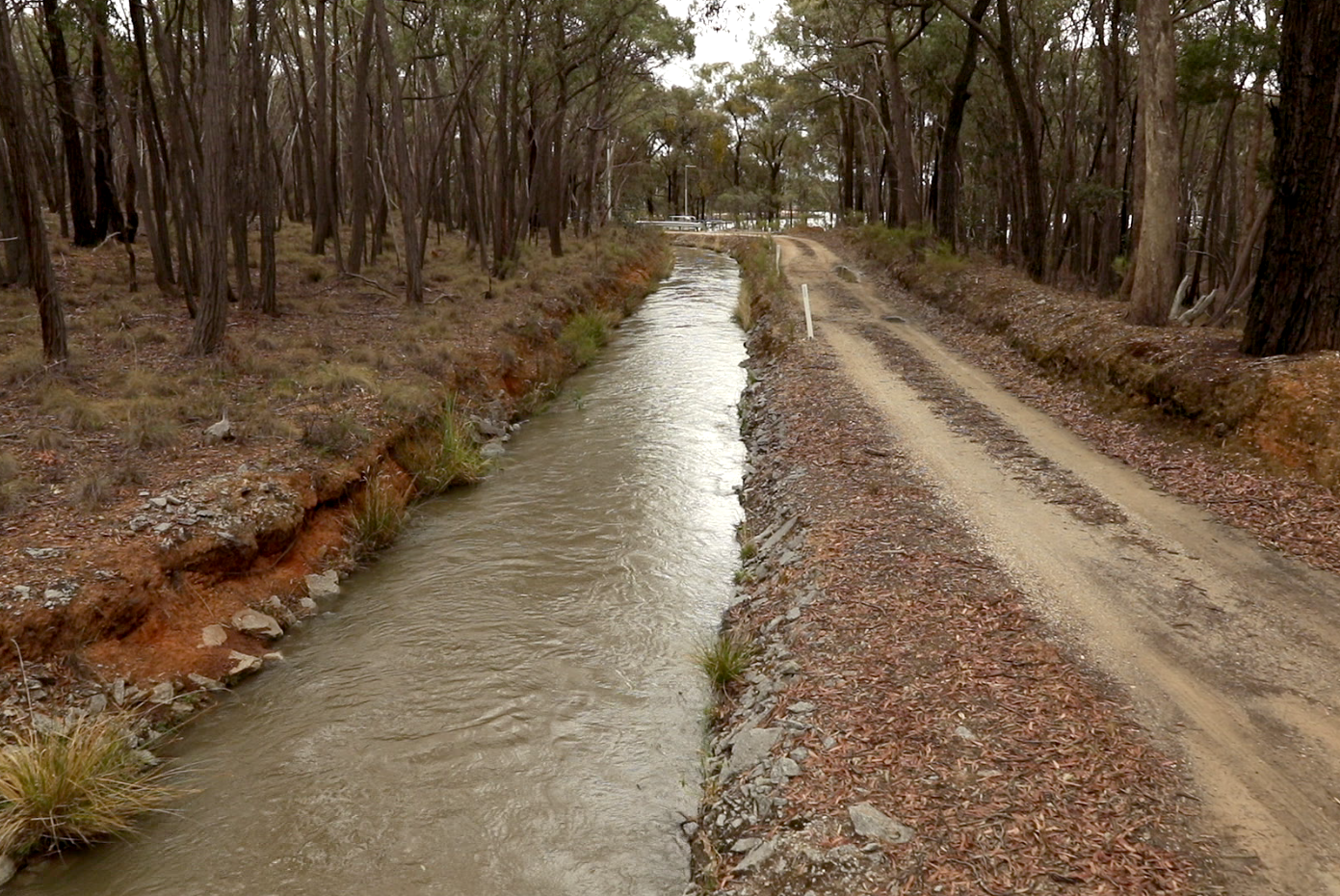
Coliban Main Channel
Coliban Main Channel
When gold was discovered in Bendigo in the 1850s thousands crowded Bendigo Creek, panning for gold and polluting the water. A reliable, clean water supply needed to be found.
Irish civil engineer Joseph Brady was tasked with planning the required water scheme. His initial plans used eight reservoirs, six for mining and two for domestic supply. The first reservoir was built in Golden Square in 1859. Investors had hoped to pay for it with gold mined at the site. However there was not enough gold left at the site, and it was abandoned.
Reservoir No. 7 at Big Hill was built in 1861 and was more successful, but proved to be insufficient for the growing demand for water. Brady looked further afield and suggested a reservoir at Malmsbury, with a gravity-fed channel bringing the water to Castlemaine and Bendigo. The system included the Coliban Main Channel, 70km of open water channels, aqueducts, syphons and tunnels. Initially the government was reluctant to fund the endeavour, but the drought of 1865 changed their minds.
Work on the Malmsbury Reservoir began, and by 1874 water was flowing to Castlemaine, and reached Bendigo in November of 1877.
The Upper Coliban Reservoir (1903) and Lauriston Reservoir (1944) have since been added to the system to increase the available water in the Coliban Southern System.
Learn more about Joseph Brady and the Coliban System of works in this historical guide.
Daylight hours
Facilities
- Cycling
- Walking

The Coliban Main Channel is a system of 70km of open water channels, aqueducts, syphons and tunnels. The channel transports raw water from our southern storages (Upper Coliban, Lauriston and Malmsbury Reservoirs) to Water Treatment Plants in Bendigo and Castlemaine. This water is then treated to a standard where it is safe to consume and supplied as drinking water to these cities.
The Coliban Main Channel also provides raw water to many of our rural customers.
Large sections of the channel have walking paths which can be accessed by the public.
You can find more information about where the walking paths are located along the Coliban Main Channel via the following links:
- Cycling
- Dogs (must be on leads)
- Walking paths
- Alcohol
- Swimming (including dogs)
- Fishing
- Horses
- Firearms or shooting
- Damage to Dja Dja Wurrung cultural heritage, digging of soil & disturbance to plants or wildlife
- Camping & fires
Keep to the track
Beware limbs may fall
Beware of uneven ground
Clean up after your dog
Do not climb fences
Do not remove timber, plants, wildlife or rocks
Take rubbish with you
Beware of Wildlife
Beware of rapidly rising water